Forestry


https://www.youtube.com/watch?v=CUhTijm-_nQ


https://www.youtube.com/watch?v=Un2yBgIAxYs


Read the text in the supplement - it will provide necessary information and should inspire your individual long turn talk.


Imagine the following situation: Presentation University


Individual Long Turn                                                                                                4-5 min


You study forestry at the University of Natural Resources and Life Science, Vienna (BOKU). You are spending an exchange semester at the University of Sibiu (Romania) at the moment. For a seminar you have to prepare a short presentation about forestry in Austria.


  • Inform your fellow students about the importance and functions of forestry in Austria
  • Explain why wood becomes increasingly important also in the field of architecture
  • Outline the increasing importance of wood in the field of energy supply


Paired Activity                                                                                                           8-10 min.


After your seminar you take some drinks with your colleagues. There you converse about:


  • the importance of our woods for biodiversity and Austrian tourism
  • the advantages of wood as building material
  • problems in Austrian forests
  • the risks of global deforestation
  • sustainable ways of wood production and energy supply


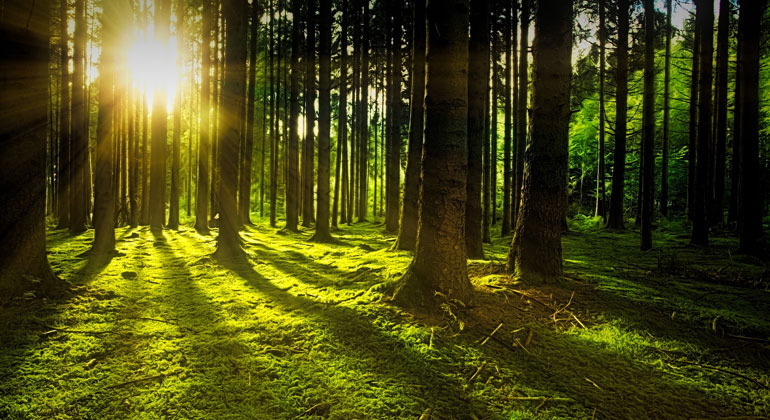
http://www.wallpaperup.com/74771/Rivers_Forests_Stones_Salzach_Austria_Moss_Trees_Nature.


THE AUSTRIAN FOREST ACT

About half of Austria's area is covered by forest land. Therefore, the right use of sustainable management can only be done by a natural oriented forestry. This guarantees a continuous supply of timber, a steady flow of income for the owners - the employers as well as for the employees of the forest industry - and it is also the basis of settlement and agricultural utilization of our environment. Natural oriented forest management can only be a compromise between ecological conditions and economic objectives. The conflicting interests of economy and ecology compel foresters to be flexible since they must deal with public interests more and more.

A basic principle of Austrian forestry is the principle of sustained yields to preserve the forests, their functions and social benefits. This does not necessarily mean to merely copy the regularities of nature but to think in economic terms as well. The strategy of a natural oriented forestry is to combine economy and nature. A well-planned forest policy could be applied to the high standards of environmental policy. However without the natural protective effects of forests - especially regarding avalanches, torrents and mud-rock flows - our Alpine region could not be settled and inhabited.

By Dieter Hanak-Hammerl, Federal Ministry of Agriculture and Forestry, Vienna http://www.fao.org/docrep/w3722e/w3722e05.htm

Vienna plans world's tallest wooden skyscraper

Architects hail environmental benefits of HoHo project – but the city’s fire brigade has concerns
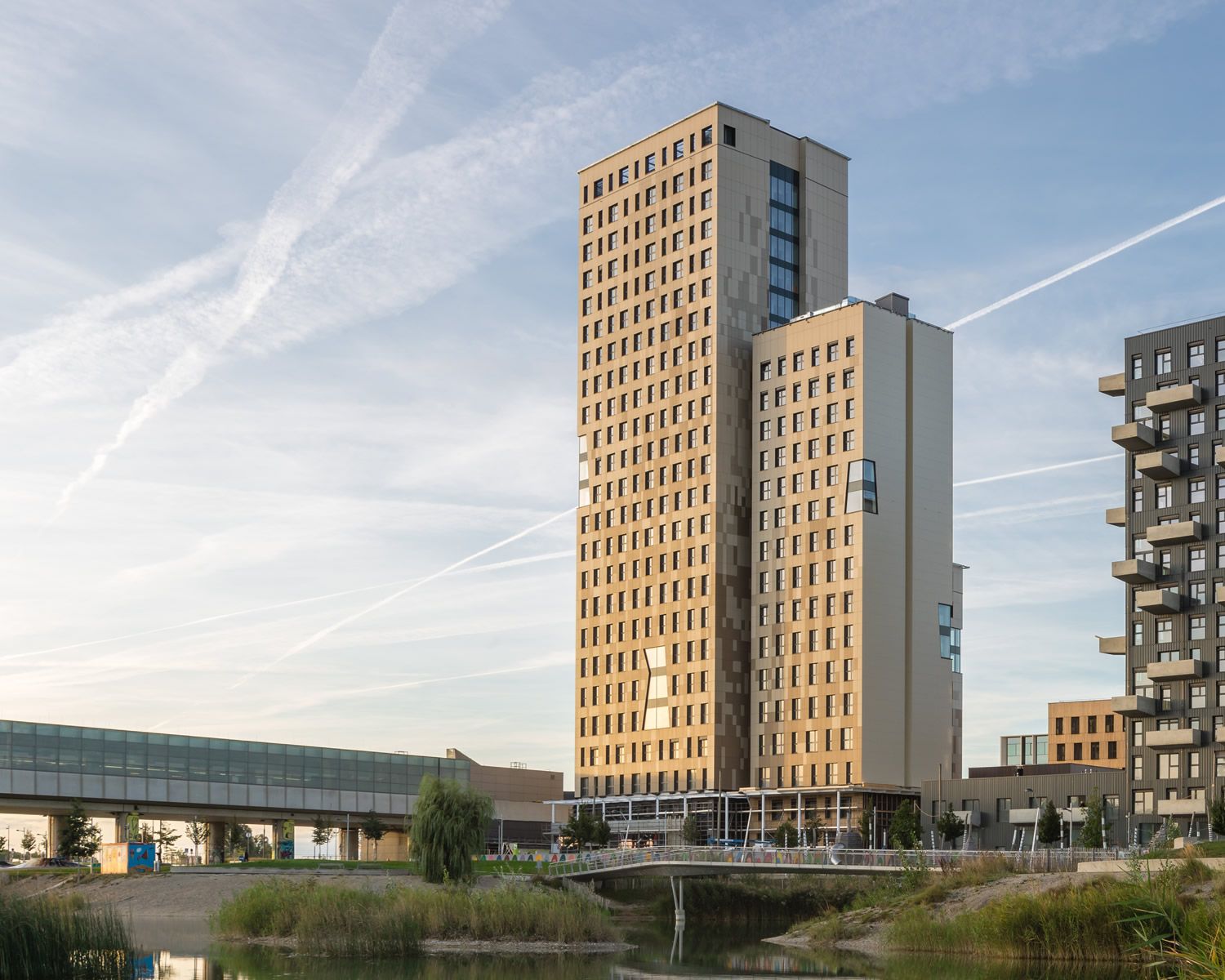


A wooden skyscraper that Austrian architects say will be the tallest of its kind in the world is to be built in Vienna next year. The 84-metre (276ft) HoHo project in the Seestadt Aspern area, one of Europe’s largest urban development sites, will house a hotel, apartments, restaurant, wellness centre and offices, and is expected to cost about €60m (£44m). Project developer Caroline Palfy, of Kerbler, which is behind the building, said the firm chose wood because of its environmental benefits. “I think it is important everyone now in 2014 thinks in different ways. We have wood, which is a perfect construction material for building,” she said. “It was used 200 years ago and it was perfect then and is perfect now. ”With 76% of the building expected to be made from wood, architects say it will save 2,800 tonnes of CO2 emissions when compared with a similar concrete structure, the equivalent of driving a car 25 miles every day for 1,300 years. Compared with wood, which absorbs CO2 from the air while a tree is growing, the production of concrete causes high levels of carbon emissions. The Vienna fire service has concerns about the wooden structure, however, and is working with the architects to test their plans. “The main factor is that everyone wants to build higher and higher buildings. An 84-metre-high building in Europe is not usual and there are a lot of necessities that have to be realised,” said fire service spokesman Christian Wegner. “A few of us were upset because it was crazy to present an idea like this that has not been discussed with everyone yet. “They have to carry out special tests on the correct combination of concrete and wood. We also want to develop a more fail-safe sprinkler system. I expect they will pass the tests but if they develop the building as they say they will, it will be a serious project.” Other high-rise buildings in Vienna have attracted concerns from politicians, who have described their height as “exorbitant” and complained they were not being filled. But Katrina Riedl, spokeswoman for the ÖVP, the Austrian People’s party, defended the latest project. “Vienna is not a skyscraper city but innovation is part of our city and why not try new things,” she said.

https://www.theguardian.com/cities/2015/mar/01/vienna-plans-worlds-tallest-wooden-skyscraper


Conspiracy Theories


List of Conspiracy Thoeries

 https://www.livescience.com/11375-top-ten-conspiracy-theories.html


Romeo and Juliet


https://www.sparknotes.com/shakespeare/romeojuliet/

https://www.shakespearesglobe.com/

Study Questions: 
Imagine the following situation: Leisure Club

Monolog                                                                                           5 min

You are one of the organising members of the Leisure Club and today you watch a modern version of the famous drama: “Romeo and Juliet”. After watching the movie, you give a talk about the film and parallels to our lives. In your talk, answer the following questions:


  • outline why this old story is still topical today
  • explain the reasons behind the increase of social media and online communication
  • contrast the difference between a real-life friendship and a virtual friendship.


Dialog                                                                                               10 min.
With a colleague you discuss modern dating culture and romantic relationships after the meeting. In the discussion you state your opinion on,


Writing TASK:
Interpretation!!!
ACT I
PROLOGUE


Two households, both alike in dignity,
In fair Verona, where we lay our scene,
From ancient grudge break to new mutiny,
Where civil blood makes civil hands unclean.
From forth the fatal loins of these two foes
A pair of star-cross'd lovers take their life;
[…]

ACT V
EPILOGUE
PRINCE
A glooming peace this morning with it brings;
The sun, for sorrow, will not show his head:
Go hence, to have more talk of these sad things;
Some shall be pardoned and some punished.
For never was a story of more woe
Than this of Juliet and her Romeo.


  • Give a short plot outline of the famous drama! Comment on the Prologue and the Epilogue of this famous play. What is meant by: “star-cross'd lovers”?

  • Deal with topics, interesting to you! (e.g. Love and hate, love at the first sight, passion, sex, marriage, the church, religion, violence, death, drugs, friends and group pressure, committing suicide, enemies, relatives and parents, …)

  • In your opinion, which measures are to be taken to prevent young people from committing suicide and lead a happy life?

Sports


  1. Soccer (Football)
  2. Basketball
  3. American Football
  4. Baseball
  5. Rugby
  6. Cricket
  7. Tennis
  8. Golf
  9. Badminton
  10. Table Tennis
  11. Volleyball
  12. Beach Volleyball
  13. Hockey (Field Hockey/Ice Hockey)
  14. Lacrosse
  15. Handball
  16. Polo
  17. Squash
  18. Racquetball
  19. Fencing
  20. Archery
  21. Gymnastics
  22. Swimming
  23. Diving
  24. Water Polo
  25. Synchronized Swimming
  26. Surfing
  27. Skateboarding
  28. Snowboarding
  29. Skiing (Alpine, Cross-Country, Freestyle)
  30. Bobsleigh
  31. Luge
  32. Skeleton
  33. Martial Arts (Karate, Judo, Taekwondo, etc.)
  34. Wrestling
  35. Boxing


  1. Chess Boxing: A combination of chess and boxing where participants alternate between rounds of boxing and playing chess.
  2. Underwater Hockey: Players push a puck along the bottom of a swimming pool with a small stick.
  3. Sepak Takraw: A sport originating from Southeast Asia where players use their feet, knees, chest, and head to hit a rattan ball over a net.
  4. Quidditch: Inspired by the fictional sport from the Harry Potter series, players run with broomsticks between their legs while trying to score goals with a ball.
  5. Wife Carrying: A competition where male participants race while carrying their female partners on their backs.
  6. Extreme Ironing: Participants take ironing boards to remote or dangerous locations and iron clothes.
  7. Cheese Rolling: Competitors chase a wheel of cheese down a steep hill, with the first to reach the bottom winning the cheese.
  8. Bog Snorkeling: Participants compete to navigate a water-filled trench cut through a peat bog using snorkels and flippers.
  9. Shin-Kicking: Contestants attempt to kick each other's shins until one is unable to continue.
  10. Hornussen: A Swiss sport where players hit a small puck-like object with a long flexible whip.
  11. Ferret Legging: Contestants trap ferrets in their trousers and see who can endure the longest without injury.
  12. Competitive Eating: Participants compete to consume large quantities of food in a short amount of time.
  13. Extreme Ironing: Participants take ironing boards to remote or dangerous locations and iron clothes.
  14. Bed Racing: Teams race decorated beds through the streets, with one member riding and others pushing.
  15. Elephant Polo: Polo played on the backs of elephants instead of horses.
  16. Toe Wrestling: Participants attempt to pin down each other's toes for three seconds.
  17. Bossaball: A combination of volleyball, soccer, and gymnastics, played on an inflatable court with trampolines.
  18. Eukonkanto (Wife Carrying): Originating from Finland, participants carry their wives through an obstacle course.
  19. Urban Golf: Playing golf in an urban environment, using buildings, lampposts, and other urban features as targets.
  20. Caber Tossing: A traditional Scottish sport where participants flip a large wooden pole end over end.
  21. Gurning: Contestants contort their faces into the ugliest expressions possible.
  22. Haggis Hurling: Participants throw a haggis (a traditional Scottish dish) as far as possible.
  23. Camel Wrestling: Two male camels are pitted against each other in a wrestling match.
  24. Joggling: Competitors jog while juggling objects like balls or pins.
  25. Firefighter Combat Challenge: Firefighters compete in a series of tasks simulating the physical demands of firefighting.
  26. Segway Polo: Polo played while riding on Segways instead of horses.
  27. Kabbadi: A contact team sport that originated in ancient India, where players tag opponents while holding their breath.
  28. Buzkashi: A traditional Central Asian sport where horse-mounted players attempt to drag a goat carcass towards a goal.
  29. Tuna Tossing: A competition where participants throw a tuna fish as far as possible.
  30. Unicycle Hockey: Hockey played while riding unicycles, with players using sticks to hit a ball into the opposing team's goal.

The Unbelievable


https://www.youtube.com/watch?v=c7ynwAgQlDQ


https://www.youtube.com/watch?v=quOdF1CAPXs
 
 
https://www.youtube.com/watch?v=-10vg90ZIy8


_______________________________________________

Imagine the following situation: Students´Meeting at University

Individual Long Turn 4-5 min

You study at the Technical University in Graz and you are a students´ representative (Österreichische Hochschülerschaft). There you meet fellow students from all around the world. To get to know each other a little bit better, you organise weekly meetings to discuss several topics. Today you want to talk about paranormal phenomena and superstition. First you introduce the topic giving a short talk:

· Present some superstitious behaviour and famous theories about several phenomena

· Analyse why people tend to believe the unbelievable

· Give your personal opinion concerning the topic

Paired Activity 8-10 min.

With a colleague you discuss the topic. Consider the aspects below:

· discuss several weird theories and movies

· the function of new media and the internet, concerning the spreading of new unbelievable stories

· explain why there is often no 13th floor in hotels

· the credibility of the different kinds of media in general

· evaluate if some of the theories could be true and think if you are superstitious

__________________________________

1.       Aliens

2.       Pyramids

3.       Voodoo

4.       Flight 19/ Bermuda Triangle

5.       Slenderman

6.       UFO Austria

7.       Ufo Sightings Belgium

8.       Rosswell

9.       Yeti

10.   Ancient Aliens

11.   Zombies

12.   Vampires

13.   Cannibalism

14.   Dracula

15.   Corn circles

16.   Hauted Places

17.   Reincarnation

18.   Fortune telling

19.   Ouija board

20.   Earth holes (Erdlöcher) Austria

21.   Stone circles Austria

22.   Stonehenge

23.   Tumulus St. Michel

24.   Water witching

25.   Machu Picchu

26.   Nazca Lines

27.   Sailing stones

28.   Dragons

29.   Angels

30.   Magic

31.   Terrestrial  radiation

32.   Goblins

33.   Ball lightning

34.   The men who stare at goats 

35. Time travel

36. Sea monsters

37. Number 13

38. Superstition 

39 Superstitious traditions in Austria

....

Ireland


  1. Geography:

    • What is the capital city of Ireland?
    • Name three major rivers in Ireland.
  2. History:

    • In what year did Ireland gain independence from British rule?
    • Who is considered one of Ireland's most famous political figures and served as the first President of Ireland?
  3. Culture:

    • What is the traditional Irish dance called, characterized by quick footwork and rigid upper body?
    • Can you name three traditional Irish instruments commonly used in Irish folk music?
  4. Literature:

    • Who is the famous Irish author known for works like "Dubliners," "Ulysses," and "A Portrait of the Artist as a Young Man"?
    • What prestigious literary award is presented annually in Dublin, Ireland?
  5. Landmarks:

    • Name two historical landmarks in Ireland that are UNESCO World Heritage Sites.
    • Which ancient Irish structure is known for its distinctive circular stone beehive huts?
  6. Language:

    • What are the two official languages of Ireland?
    • Can you provide a common Irish greeting and its English translation?
  7. Economy:

    • What major industries contribute significantly to Ireland's economy?
    • Name a multinational technology company that has a significant presence in Ireland.
  8. Nature:

    • What is the name of the rocky coastal area in County Clare famous for its unique geological formations?
    • Identify a famous Irish lake known for its monster legend.
  9. Festivals:

    • Name a widely celebrated Irish festival that occurs annually on March 17th.
    • What traditional Irish food is commonly associated with Halloween?
  10. Sports:

    • What is the most popular sport in Ireland?
    • Name a famous Irish sportsman or sportswoman known for their achievements on the global stage.


Waiting for Godot

http://www.sparknotes.com/lit/godot/

To check words use: (also available as mobile app on your smart phone)
http://www.dict.cc/
http://www.linguee.de/

Context:
Samuel Beckett was born in Dublin in 1906. He befriended the famous Irish novelist James Joyce, and his first published work was an essay on Joyce. In 1951 and 1953, Beckett wrote his most famous novels, the trilogy Molloy, Malone Dies,and The Unnameable.
Waiting for Godot, Beckett's first play, was written originally in French in 1948 (Beckett subsequently translated the play into English himself). It premiered at a tiny theater in Paris in 1953. This play began Beckett's association with theTheatre of the Absurd, which influenced later playwrights like Harold Pinter and Tom Stoppard.
The most famous of Beckett's subsequent plays include Endgame (1958) andKrapp's Last Tape (1959). He also wrote several even more experimental plays, like Breath (1969), a thirty-second play. Beckett was awarded the Nobel Prize in 1969 and died in 1989 in Paris.
Summary:
Two men, Vladimir and Estragon, meet near a tree. They converse on various topics and reveal that they are waiting there for a man named Godot. While they wait, two other men enter. Pozzo is on his way to the market to sell his slave, Lucky. He pauses for a while to converse with Vladimir and Estragon. Lucky entertains them by dancing and thinking, and Pozzo and Lucky leave.
The next night, Vladimir and Estragon again meet near the tree to wait for Godot. Lucky and Pozzo enter again, but this time Pozzo is blind and Lucky is dumb. Pozzo does not remember meeting the two men the night before. They leave and Vladimir and Estragon continue to wait.
Shortly after, the boy enters and once again tells Vladimir that Godot will not be coming. He insists that he did not speak to Vladimir yesterday. After he leaves, Estragon and Vladimir decide to leave, but again they do not move as the curtain falls, ending the play.

etc.

Absätze (Paragraphs) machen - eine Zeile freilassen!
http://www.wikihow.com/Write-a-Paragraph